
Would You Buy This Used Car? 12 Things to Check First
A used car can look excellent in photographs and still need expensive repairs. Before you agree on a price, give yourself time to check the car, its records and the person selling it. This checklist is written for buyers in India, including those shopping in Guwahati and across the Northeast.
1. Confirm who owns the car
Ask to see the Registration Certificate (RC) and check whether the seller’s identity matches the registered owner. If an agency is handling the sale, ask how it is authorised to sell the car and who will sign the transfer paperwork.
You can use the government’s Know Your Vehicle Details service to check available registration information. Treat an online result as one part of your verification; compare it with the original documents and the car itself.
2. Match the chassis and engine numbers
Compare the numbers on the car with those printed on its RC. Ask the seller to show you where the numbers are located. If they are difficult to read, appear altered or do not match the documents, stop until the discrepancy is resolved.
3. Check for an outstanding loan
Look at the RC for a financier or hypothecation entry. If the loan has been repaid but the entry remains, ask for evidence that the financier has cleared it and that the record is being updated. Parivahan identifies Form 35 as part of the process for terminating a hypothecation entry.
4. Review the service history
Ask for service invoices, not just a verbal assurance that the car was regularly maintained. Look for dates, recorded kilometres, recurring repairs and major replacements.
A missing invoice does not automatically make a car a bad purchase. It does mean you have less evidence about its upkeep, which makes an independent inspection more valuable.
5. Compare mileage with wear
The odometer reading should make sense alongside the service records and the condition of the steering wheel, pedals, seats and tyres. A low reading paired with heavy wear deserves a closer look. Mileage alone cannot tell you whether a car was maintained well.
6. Inspect the body in daylight
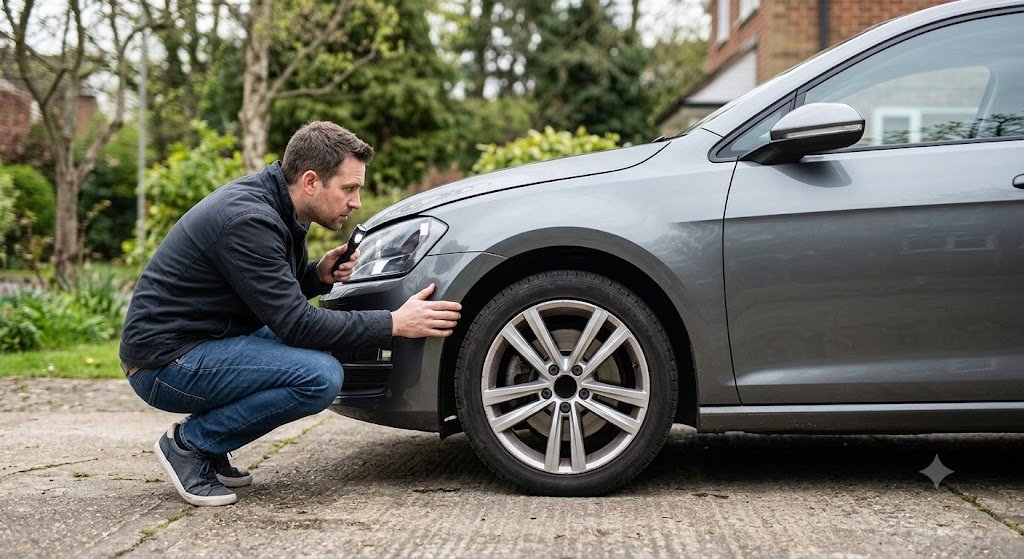
Walk around the car in natural light. Look for uneven panel gaps, differences in paint shade, overspray on rubber seals and signs of poorly repaired damage. Open the bonnet and boot to check for visible corrosion or unusual repairs.
These observations are reasons to ask questions; they are not a substitute for a professional inspection.
7. Look carefully for water damage
This is especially useful after periods of heavy rain or flooding. Check beneath floor mats, inside the boot and around seat mounts for dampness, silt, corrosion or a persistent musty smell. Test the windows, lights and other electrical controls.
Flood damage can affect electrical and mechanical components over time. An independent mechanic can help assess a car if you suspect it has been submerged.
8. Check the tyres and brakes
Inspect all tyres, including the spare. Uneven wear may warrant a check of alignment, suspension or tyre pressure. On a test drive, notice whether the car pulls to one side or vibrates while braking. Ask a mechanic to assess any concern before you buy.
9. Test the car from a cold start
Where possible, ask the seller not to warm up the car before you arrive. Listen for unusual noises on startup and watch for warning lights that remain on. Check the air conditioning, lights, indicators, wipers, infotainment and power windows.
If a warning light appears, ask for a diagnosis rather than accepting an explanation that it is “normal.”
10. Take a proper test drive
Drive at different speeds on roads where it is safe and permitted. Notice how the car starts, accelerates, steers, shifts gears and brakes. Try reversing and parking too; low-speed manoeuvres can reveal issues you might miss on a short straight drive.
If the seller will not permit a reasonable test drive or inspection, consider why.
11. Arrange an independent inspection
Ask a mechanic you choose to inspect the car before making the final payment. A professional can check areas that are difficult to assess from photographs or a short drive and give you an estimate for repairs.
The US Federal Trade Commission also recommends an independent mechanical inspection when buying a used car. Its advice on inspection is useful here, although US sales rules do not govern purchases in India.
12. Calculate the full cost and plan the transfer
The asking price is only part of the decision. Budget for immediate repairs, tyres, servicing, insurance and applicable transfer charges. Before paying, agree in writing on the final price, what comes with the car, the payment method and who will complete each transfer step.
Parivahan lists Forms 29 and 30 among the documents used for a normal ownership transfer, alongside documents such as the RC and insurance certificate. Check the current requirements for the relevant registering authority before completing the purchase. Also speak to the insurer about putting appropriate cover in your name; do not assume the seller’s policy gives you the cover you need.
A quick decision rule
If the documents match, the seller answers questions clearly, the test drive feels sound and an independent inspection finds no unacceptable costs, you have a stronger basis for deciding. If a major question remains unanswered, pause before paying an advance.
Looking for your next car? Browse the used car listings on ReOwnix, compare the available details and contact the seller to arrange your own checks.
Frequently asked questions
Should I buy a used car without service records?
You can consider it, but you will have less information about its maintenance. Have it independently inspected and account for that uncertainty when deciding what to pay.
Is a test drive enough to judge the condition?
No. A test drive helps you notice how the car behaves, while a mechanic can inspect components and potential damage that are less obvious to a buyer.
What should I check before sending an advance?
Verify the seller and ownership documents, inspect the car, agree on the terms in writing and understand the ownership transfer process. Avoid paying simply because you feel rushed.
External links: The VAHAN vehicle details service, Parivahan ownership transfer guidance and Parivahan hypothecation guidance